
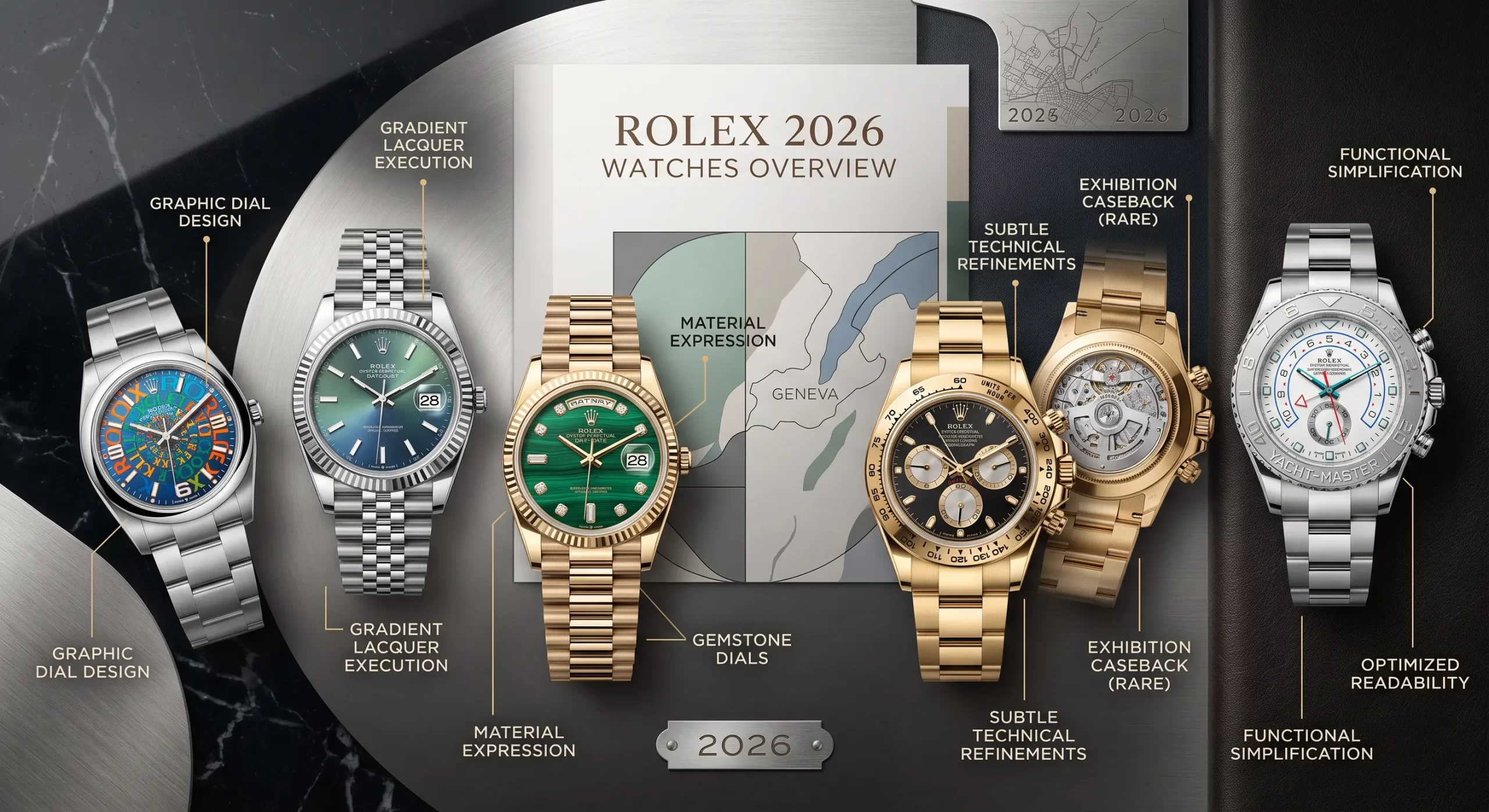
At the 2026 Watches & Wonders exhibition in Geneva, Rolex introduced a wide-ranging update across multiple core collections, continuing a long-term evolution that focuses less on radical redesigns and more on material experimentation, dial artistry, and functional refinement.
Rather than introducing entirely new model lines, Rolex’s 2026 approach is centered on reworking its most established families — Oyster Perpetual, Datejust, Day-Date, Yacht-Master, and Cosmograph Daytona — through subtle but meaningful technical and aesthetic changes.
A Century of Oyster Influence Continues to Shape Design Language
The Oyster case, first introduced in 1926, remains the foundation of almost every modern Rolex sports and professional watch. The 2026 updates reinforce this heritage by revisiting how materials and dial structures interact within the classic Oyster architecture.
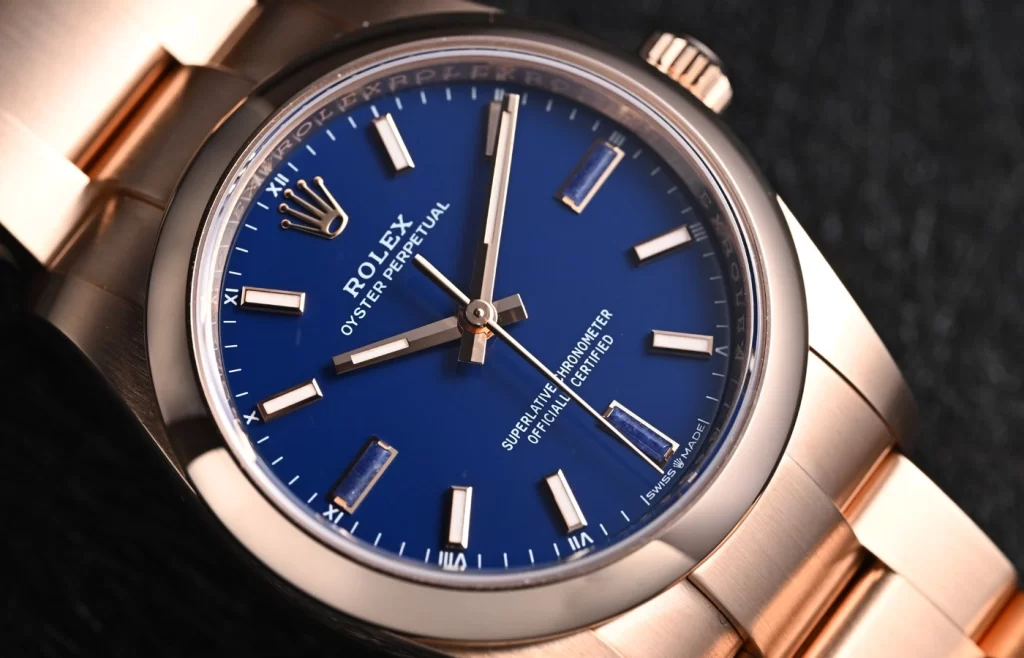
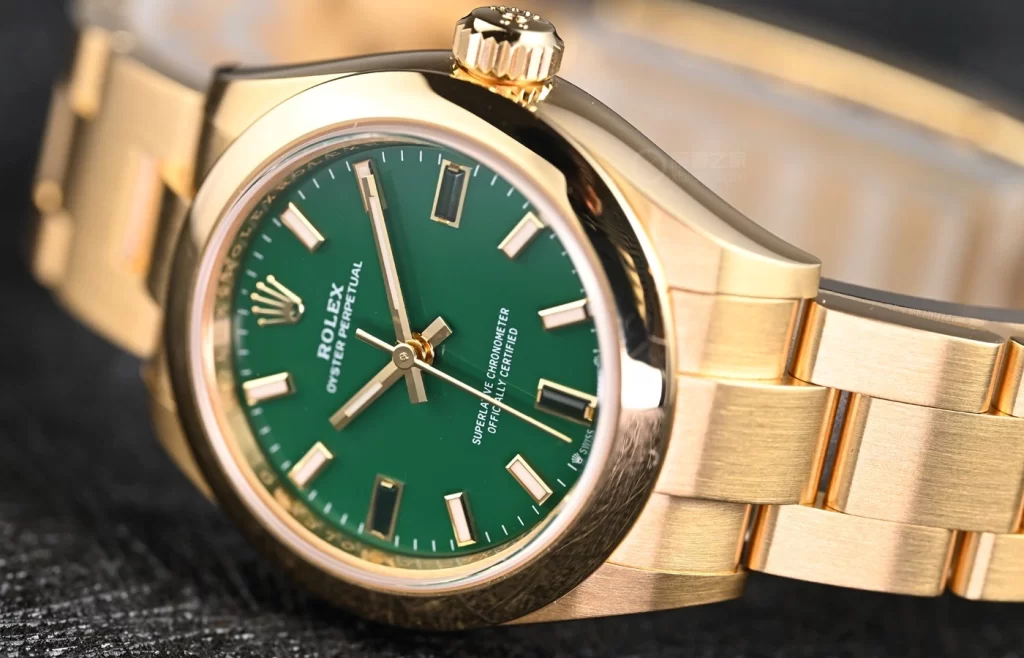
In the Oyster Perpetual line, Rolex continues to push dial experimentation further than before, especially on the 41mm and 36mm models. The brand places stronger emphasis on color layering and graphic composition, using multicolor lacquer surfaces and commemorative-style visual patterns that significantly change the visual identity of the series while preserving its minimalist mechanical base.
One of the most notable directions this year is the increasing use of complex dial finishing techniques — including multi-stage lacquer application and layered color transitions — signaling a shift toward more artistic execution within an otherwise entry-level Rolex family.
Oyster Perpetual 36 Becomes a Platform for Graphic Dial Design
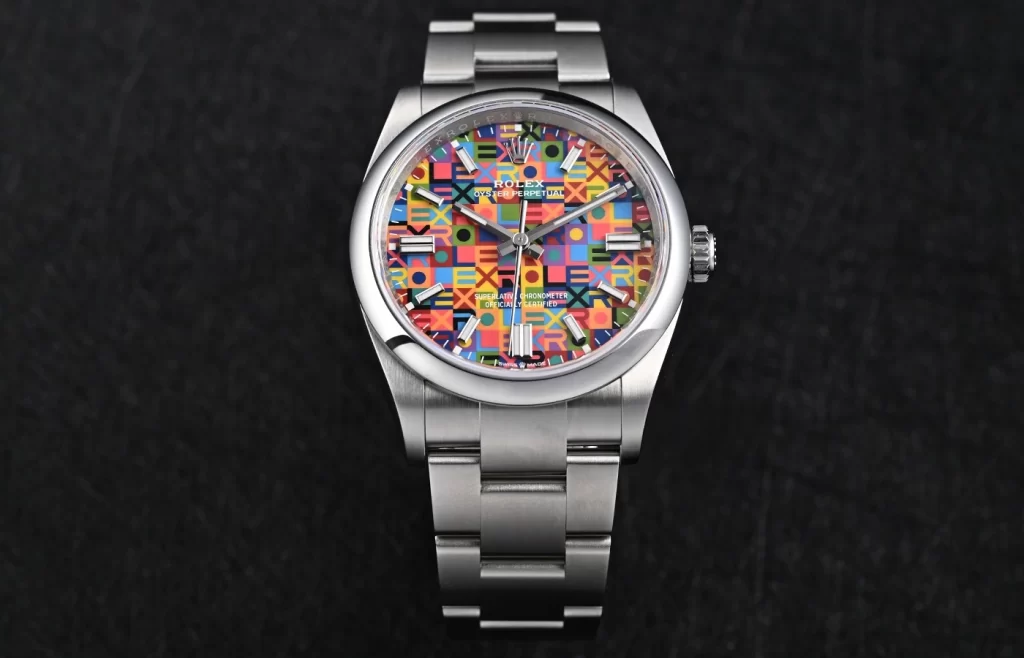
The Oyster Perpetual 36 stands out as one of the most visually expressive models in the lineup. Instead of traditional single-tone or sunburst finishes, Rolex introduces a multi-color dial concept built around typography and repeating graphical elements.
This approach turns the dial into a structured visual composition rather than a simple surface treatment. Despite the playful appearance, the execution requires high precision due to the layered application of color and strict alignment of graphical elements across the dial surface.
This represents a broader trend within Rolex design: using the most basic watch families as experimental platforms for dial creativity, without altering the fundamental case architecture or movement base.
Datejust 41 Introduces Gradient Lacquer Execution
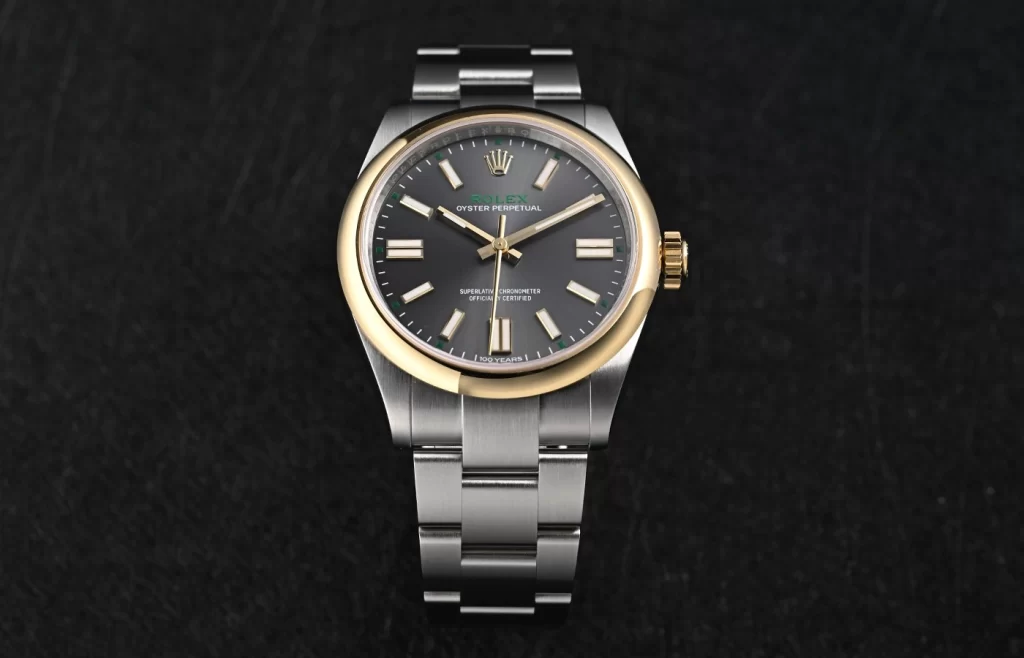
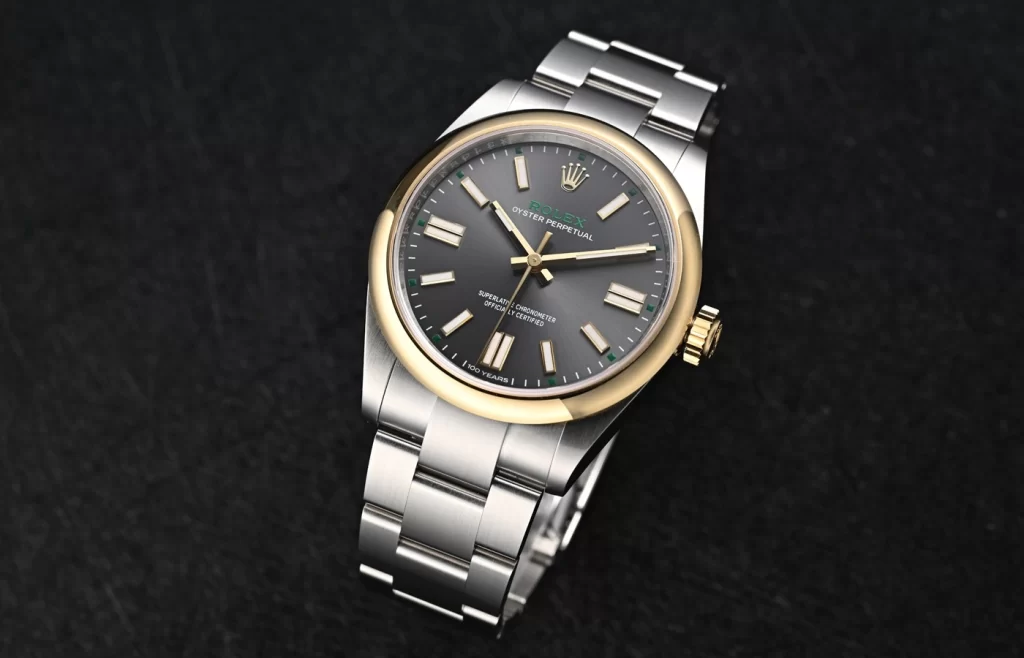
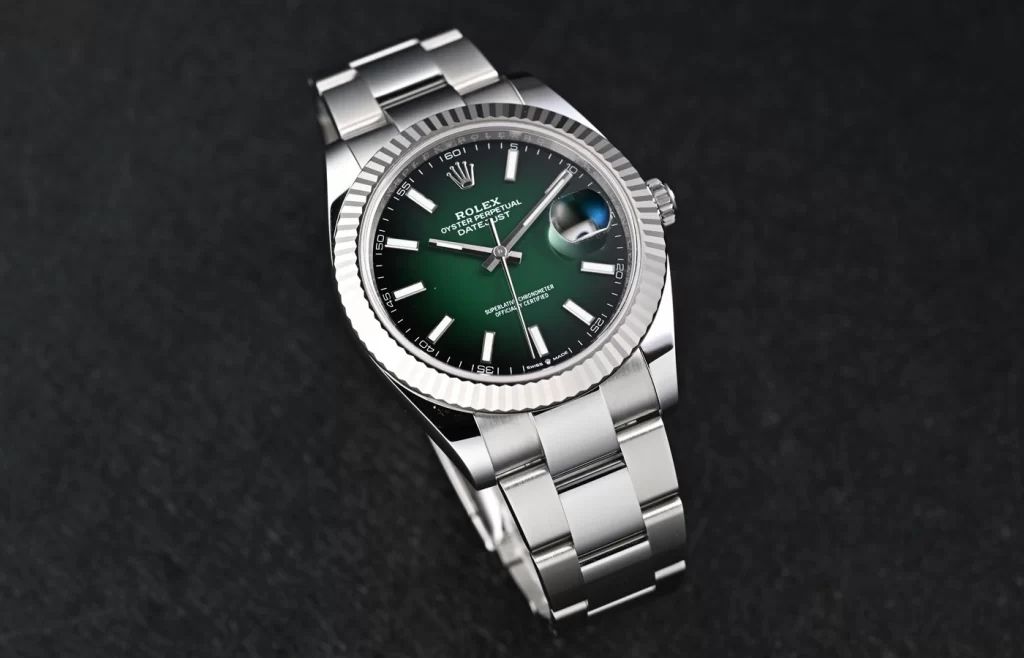
The Rolex Datejust 41 receives a more subtle but technically interesting update. The most notable change is a gradient-style lacquer dial finish, where color depth is achieved through layered application rather than printed or sunburst techniques.
This results in a more dimensional visual effect, especially under changing light conditions. Combined with traditional elements such as the fluted bezel and Oystersteel construction, the design reinforces the Datejust’s position as a bridge between classic Rolex aesthetics and modern surface experimentation.
Day-Date Expands Material Expression
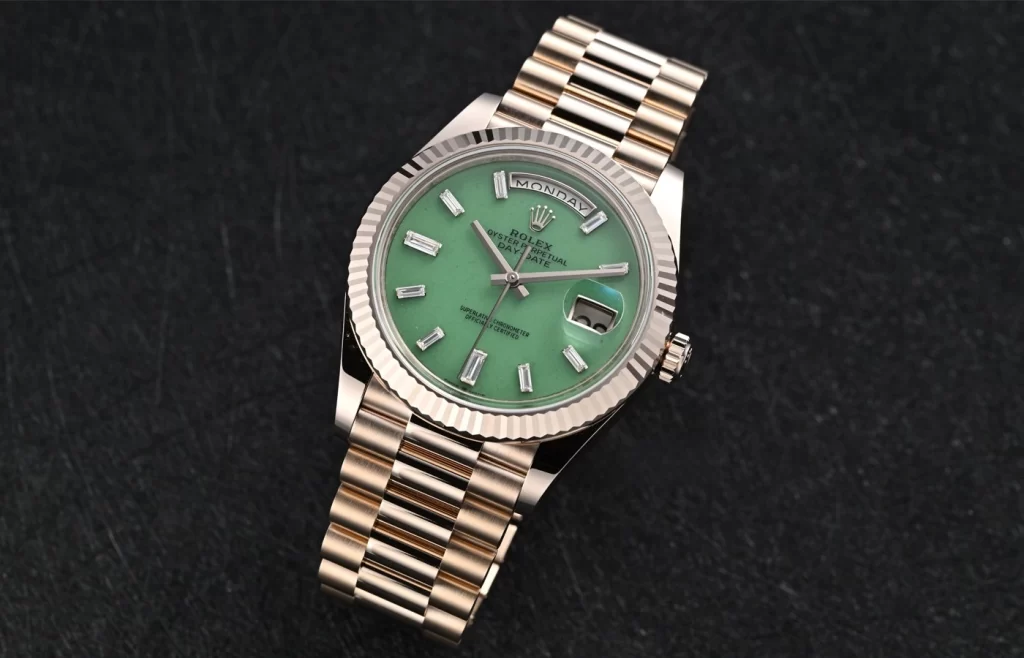
The Rolex Day-Date continues to evolve in the direction of material richness. Rolex introduces new precious-metal compositions and integrates natural stone dial variations paired with diamond hour markers.
Rather than focusing on structural changes, the emphasis is placed on tactile and visual complexity — combining gold alloys with gemstone textures and multi-tone surfaces. This reinforces the Day-Date’s long-standing identity as the most decorative and prestigious expression within the Rolex catalog.
Cosmograph Daytona Gains Subtle Technical Refinements
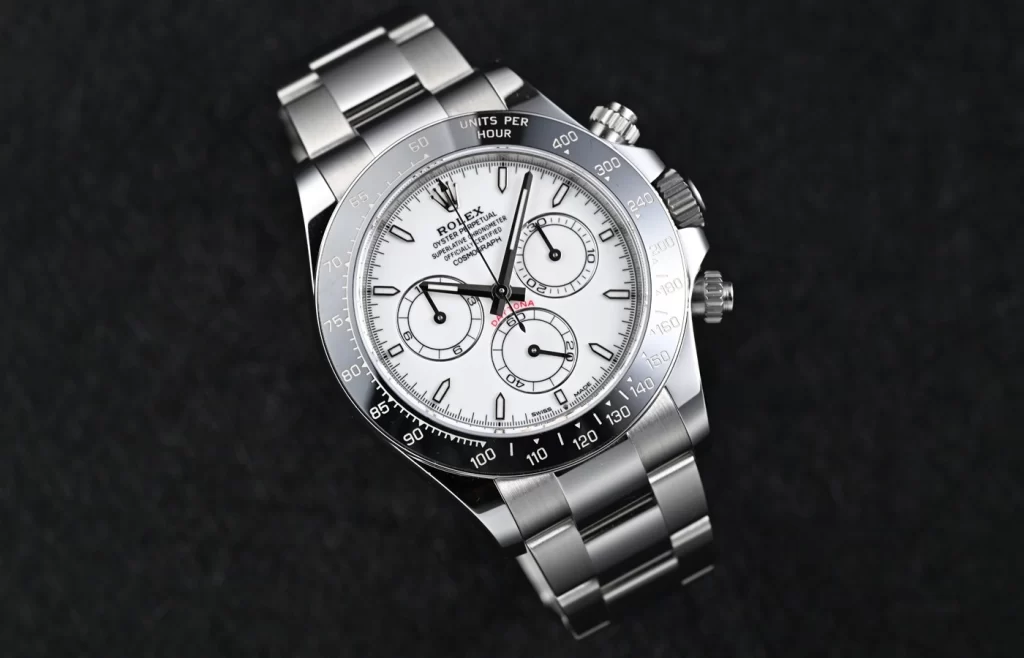
The Rolex Cosmograph Daytona receives one of the more understated updates of the year.
While maintaining its recognizable 40mm Oyster case and tachymeter bezel architecture, Rolex introduces refinements in material layering and surface finishing. Some configurations combine contrasting metals across case components, while select models incorporate enamel-style dial finishes and enhanced transparency elements such as exhibition casebacks — a rare direction for the Daytona line.
The overall theme is restraint: preserving the Daytona’s motorsport identity while enhancing visual depth through material contrast rather than structural redesign.
Yacht-Master II Focuses on Functional Simplification
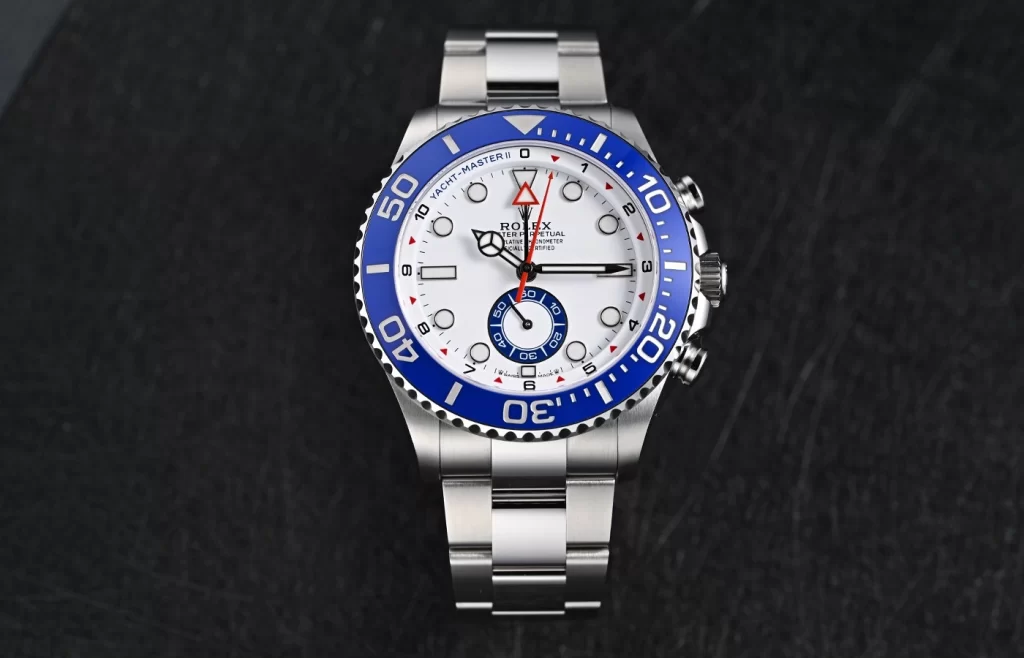
The Yacht-Master II receives the most functional update of the 2026 lineup. Rolex refines the regatta countdown system by simplifying the setting mechanism and improving operational clarity.
The redesigned control logic allows the countdown function to be adjusted more intuitively via a dedicated pusher system, while the counter display has been optimized for quicker readability during use.
This update reflects a broader Rolex philosophy in recent years: improving usability without altering the core identity of specialized tool watches.
Overall Trend: Evolution Through Surface, Not Revolution Through Form
Across the entire 2026 collection, Rolex demonstrates a consistent design direction: evolution through surface and material refinement rather than radical structural change.
Three clear themes define this year’s releases:
- Increased use of multi-layer dial finishing
- Expansion of precious metal and gemstone combinations
- Subtle functional refinements rather than mechanical reinvention
Instead of redefining its catalog, Rolex continues to reinforce and slowly reinterpret its existing icons — ensuring long-term continuity while still introducing visible novelty at the surface level.
For collectors and enthusiasts, 2026 is not a year of disruption, but a year of controlled evolution across the brand’s most established models.



 Victory Factory (VF) Rolex Explorer II 42mm 226570 White Dial – Super Clone with Clean Factory Parts & Dandong 3285 Movement
  Victory Factory (VF) Rolex Explorer II 42mm 226570 Black Dial – Super Clone with Clean Factory Parts & Dandong 3285 Movement